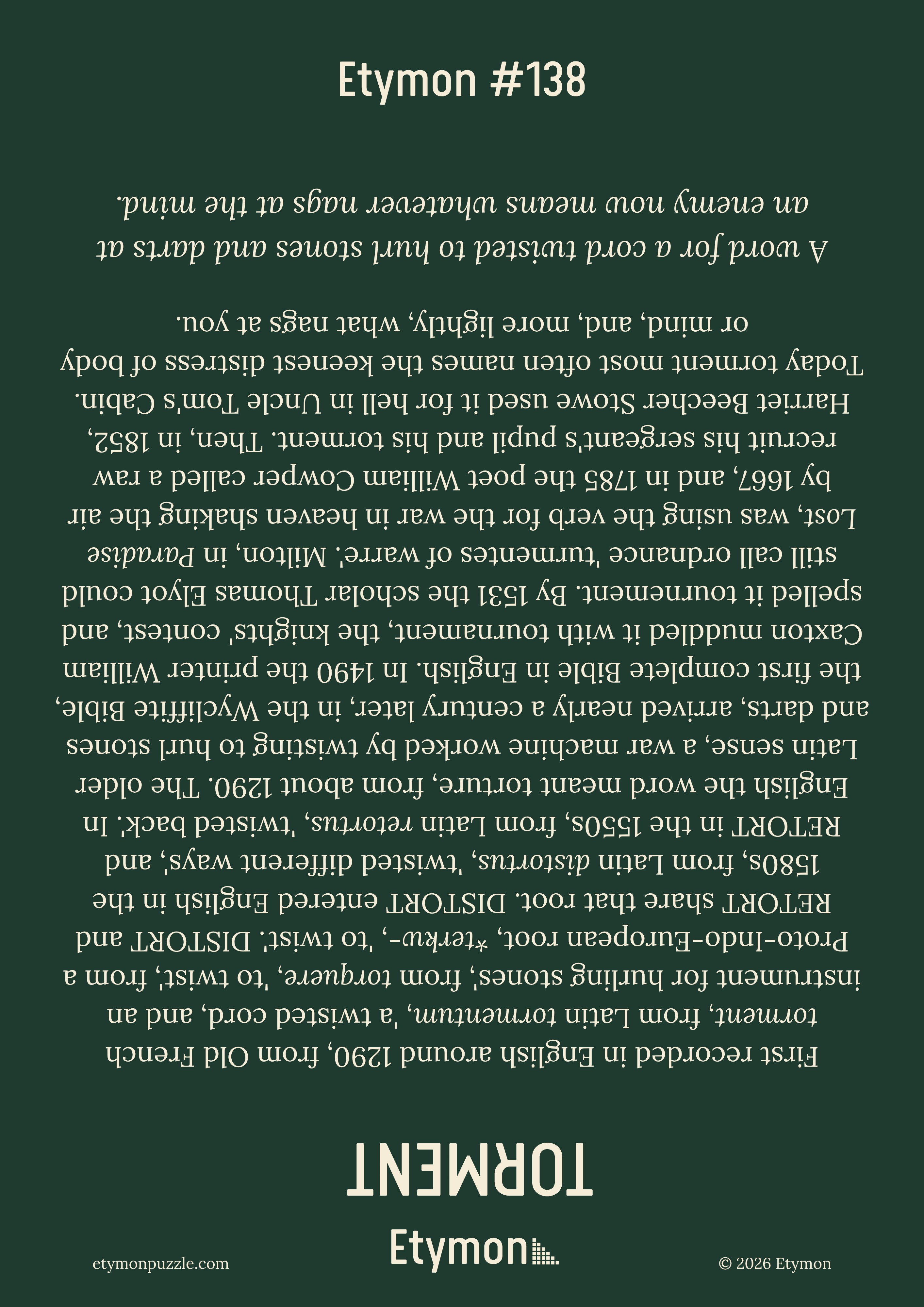
The word was first recorded in English around 1290, from French, and before that, Latin. The Wycliffite Bible, the first complete Bible in English, used the plural in a passage about an army set to hurl stones and darts.
Old French had already used the word by the eleventh century. In 1490 the printer William Caxton muddled it with a knights' contest.
Behind the French form lay a Latin word for something worked by twisting, built from a verb meaning 'to twist'. That verb traces to a Proto-Indo-European root, *terkw-, meaning 'to twist', which may also lie behind a Sanskrit word for a spindle.
DISTORT and RETORT share the same root. DISTORT entered English in the 1580s, from Latin, first meaning to twist the truth, and later to twist a shape. RETORT entered English in the 1550s, from Latin, meaning to return in kind, especially an injury, and later a sharp reply.
By 1667 Milton, in Paradise Lost, was using the verb for the war in heaven shaking the air. In 1785 the poet William Cowper called a raw recruit his sergeant's pupil and his trouble. By 1852, in Harriet Beecher Stowe's Uncle Tom's Cabin, it could mean hell itself. Today it most often names the keenest distress of body or mind, and, more lightly, what nags at you.
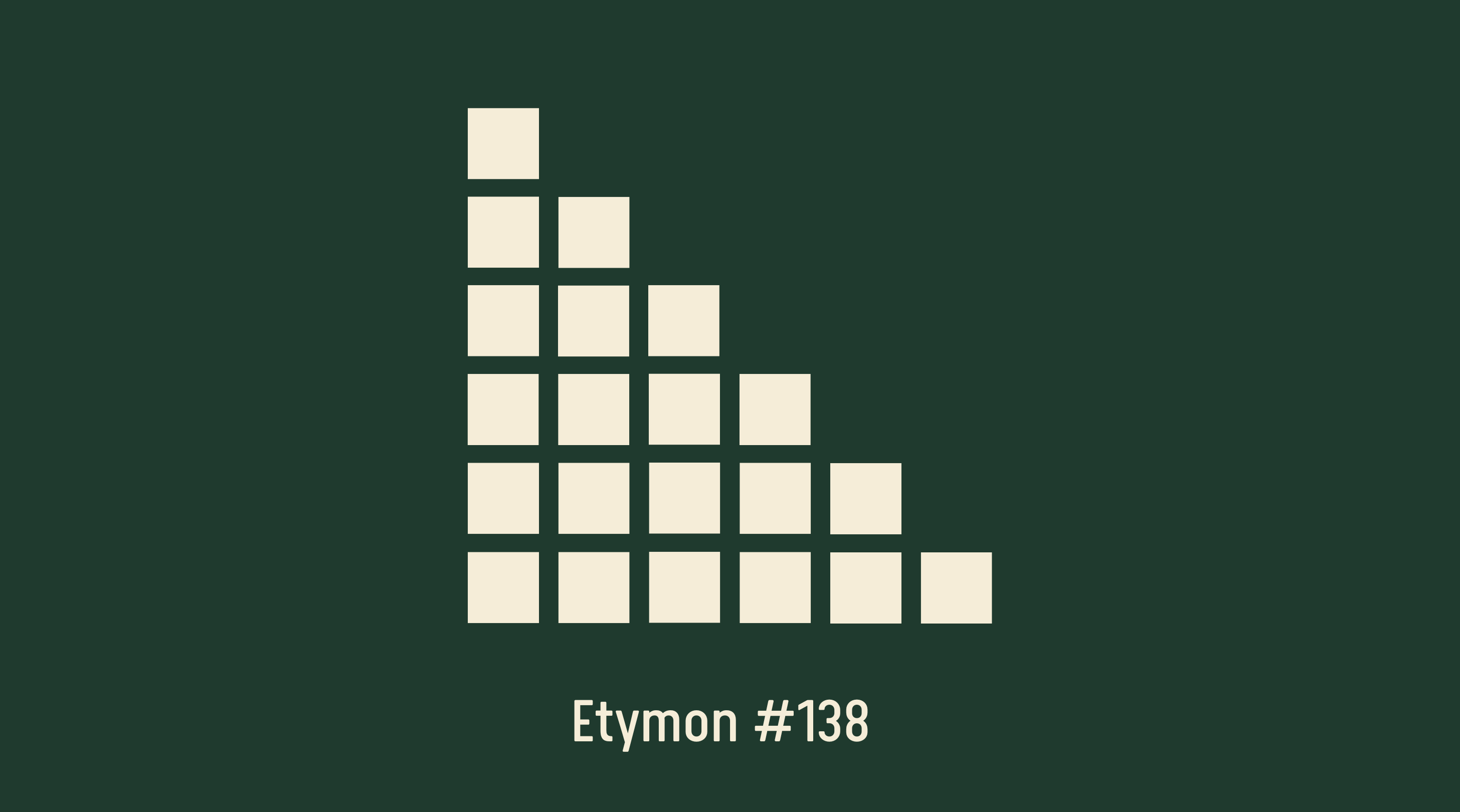
Seven letters.
Answer Card
Flip your screen to read the Answer Card.
Enjoyed today’s Etymon puzzle?
Get The Classical Word Collection free.
Ten Etymon puzzle cards exploring the Greek and Latin roots of English, yours when you subscribe free to Etymon.
Plus a new Etymon puzzle every day — free Monday to Friday.
Share your Solved in N
Share where you solved this Etymon puzzle on Substack Notes.
Find your relevant Solved in N banner above and tap the Restack button (the two circular arrows) in the banner’s top-right corner. Your banner will open automatically in a new Substack Note, ready to post. Add a comment if you like (please avoid posting the answer directly), then tap Post.
How did you get on?
Share how many clues you needed to solve this Etymon puzzle in the comments below.



Enjoyed today’s Etymon? 🧩 🤔 How many clues did you need? Share your “Solved in N” below!
And if you could restack today’s free puzzle so more people can discover Etymon, that would make my weekend.