


The word was first recorded in English by about 1475, from French and Latin. In 1868 the Anthropological Review used it to describe the flint tools of a prehistoric age.
French had already used the word by 1310, for a kind of cleverness or ingenuity. Behind the French form lay a Latin word, and behind that, an older Latin word formed from a prefix meaning 'in' and a verb.
In Latin, the verb behind it meant 'to build', so the older word was formed as 'building within'. That verb comes from an extended form of a Proto-Indo-European root, *stere-, meaning 'to spread', which may also lie behind a Greek word for a mattress.
DESTROY and INSTRUMENT are built on the same Latin verb as this word. DESTROY was in English by about 1300, from Old French, and the Latin word behind it meant to unbuild. INSTRUMENT also entered English around 1300, from French and Latin, first meaning a musical device.
By 1771 French was using it for manufacturing, and English followed. In 1843 the Scottish writer Thomas Carlyle called its leaders 'the Captains of the World'. Today it more commonly describes a whole sector.
Eight letters.
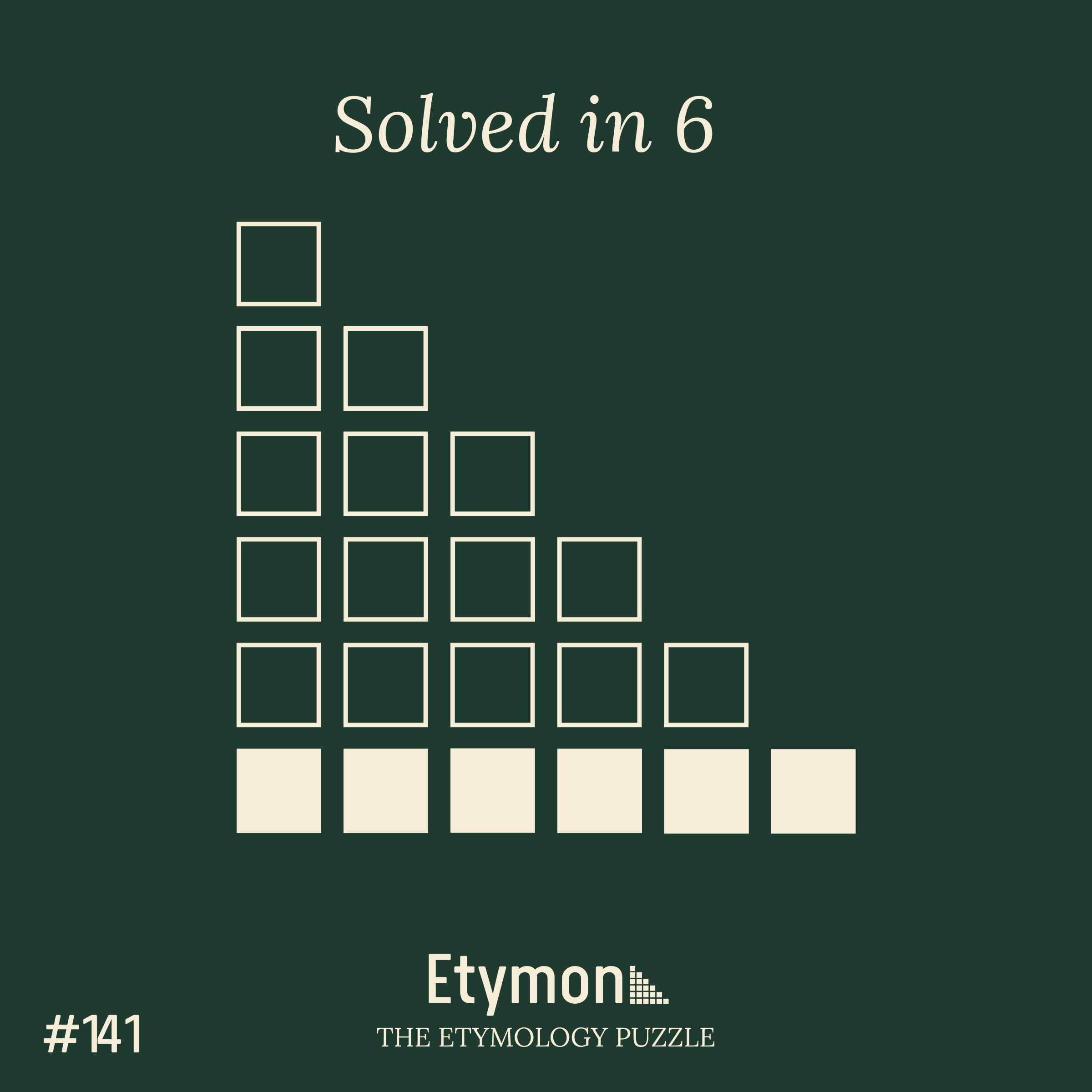
Answer Card
Flip your screen to read the Answer Card.
Enjoyed today’s Etymon puzzle?
Get The Classical Word Collection free.
Ten Etymon puzzle cards exploring the Greek and Latin roots of English, yours when you subscribe free to Etymon.
Share your Solved in N
Share where you solved this Etymon puzzle on Substack Notes.
Find your relevant Solved in N banner above and tap the Restack button (the two circular arrows) in the banner’s top-right corner. Your banner will open automatically in a new Substack Note, ready to post. Add a comment if you like (please avoid posting the answer directly), then tap Post.
How did you get on?
Share how many clues you needed to solve this Etymon puzzle in the comments below.